

Laurentina · O Rei do Bacalhau
A traditional Portuguese restaurant; browse the full menu before choosing your dinner.
Directions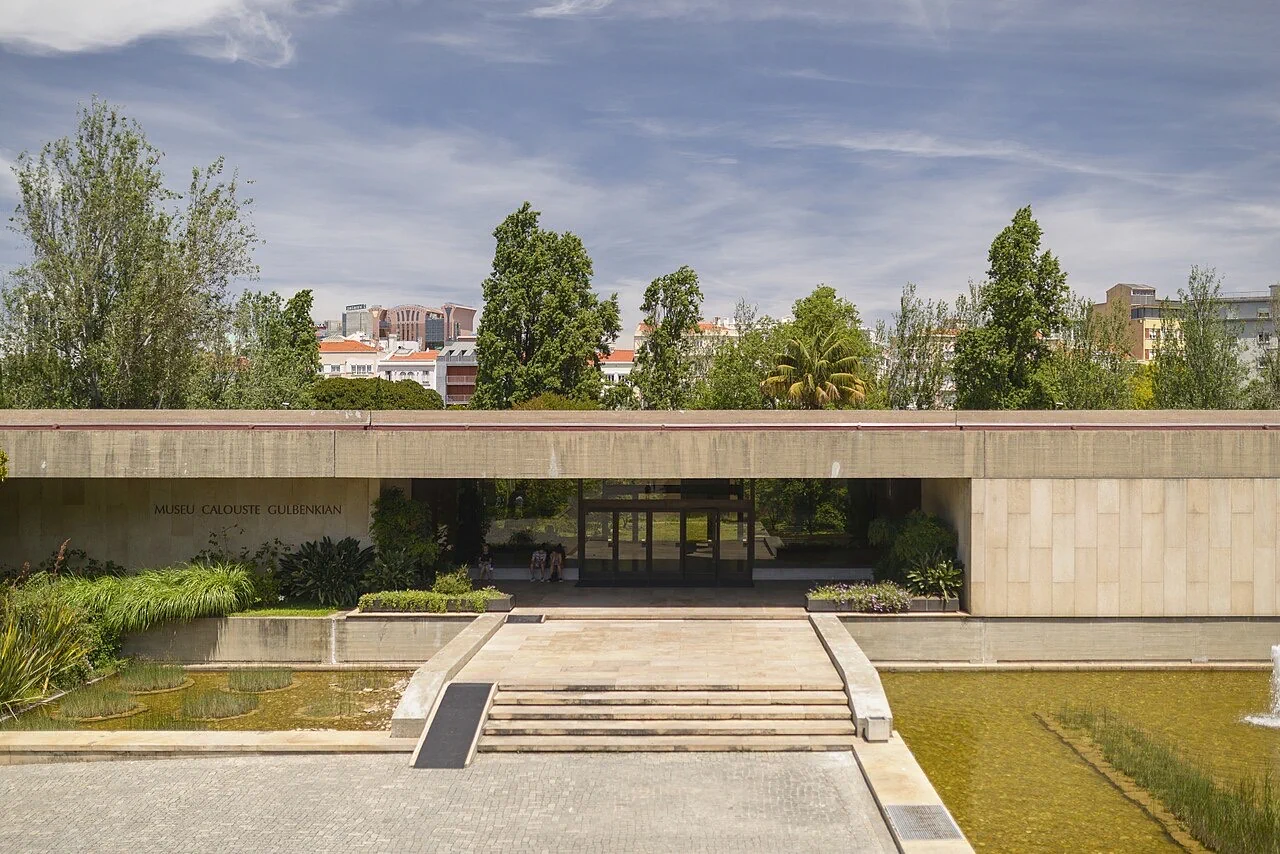
Art
A Gulbenkian morning in Avenidas Novas: the museum, CAM and the garden, then on to Campo Pequeno and the Galveias library.
Broad avenues, the Gulbenkian’s art and gardens, and a 19th-century bullring that now hosts concerts and events.
The Gulbenkian at Avenida de Berna 45A brings together the founder’s museum, the Centro de Arte Moderna, an art library, gardens and an open-air auditorium, according to Visit Lisboa. Treat the museum and CAM as two separate visits, and leave time in the garden between them.
Campo Pequeno opened in 1892, built in brick in a neo-Arabic revivalist style and renovated in 2006. Visit Lisboa describes it today as a venue for concerts, markets and shows, with a museum and a shopping centre inside. On the same square, the Palácio Galveias library is a calm place for a reading break.
Less suited to Old-Lisbon lanes and river views: for those, head to Alfama or the waterfront.
Avenidas Novas is the district of broad avenues north of Parque Eduardo VII, and the Gulbenkian is the reason to come. Give the museum, CAM and the garden a morning, then walk on to Campo Pequeno, an 1892 bullring now used for concerts, markets and shows. The metro is the easy way in. The museum is closed on Tuesdays.
Saldanha
Saldanha metro station is where the Yellow and Red lines meet, according to Metropolitano de Lisboa, which makes it an easy place to change for the Gulbenkian or Campo Pequeno. A few minutes’ walk from the square, the Casa-Museu Dr. Anastácio Gonçalves stands at Avenida 5 de Outubro 6–8.
Museus e Monumentos de Portugal says the house was built for the painter José Malhoa as his home and studio, won the Valmor prize in 1905, and was bought in 1932 by the doctor and collector António Anastácio Gonçalves. Around 3,000 works fill it: 19th- and 20th-century Portuguese painting, Chinese porcelain and furniture. It opens Tuesday to Sunday from 10:00 to 18:00, last entry 17:00, visits are accompanied, and the ticket is €5.
About 120 min · 4.2 km
Start at Jardim Amália Rodrigues, at the top of Parque Eduardo VII, then walk north to the Gulbenkian museum, its garden and CAM. Continue east to Campo Pequeno and the Galveias library, or ride the metro if your feet need a rest. The Gulbenkian lists São Sebastião (blue and red lines) and Praça de Espanha (blue line) as its stations, and the museum is closed on Tuesdays.
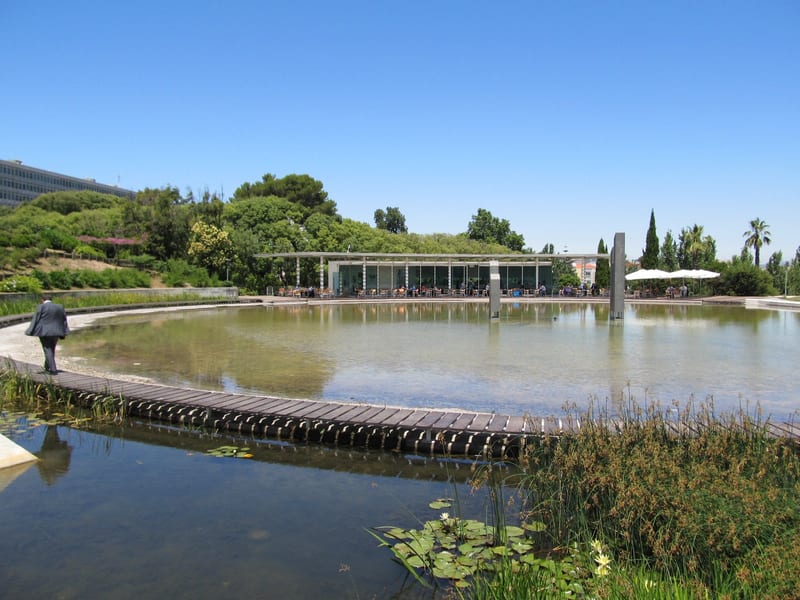
A circular pond and south-facing slopes above Parque Eduardo VII.
Directions14 min walk from stop 1

Collection art and gardens after the July 2026 reopening; CAM is a separate museum.
Walk · 14 min4 min walk from stop 2

An art visit in the Gulbenkian grounds, separate from the main museum.
Walk · 4 min18 min walk from stop 3
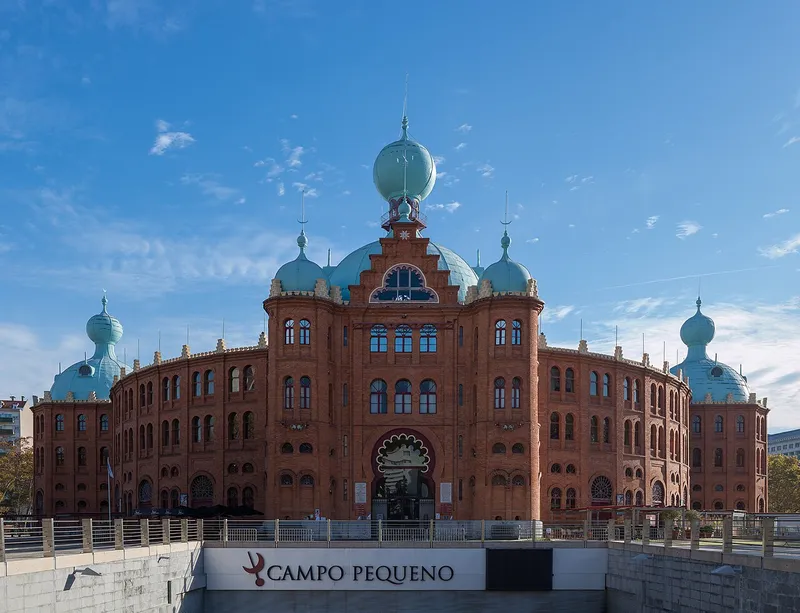
The 1892 brick bullring is now a venue for concerts, markets and shows, with a shopping centre inside. Check the programme for your date.
Walk · 18 minPhoto: Jules Verne Times Two · CC BY-SA 4.0 · Wikimedia Commons ↗
Campo Pequeno, Lisboa · Visiting details ↗
4 min walk from stop 4
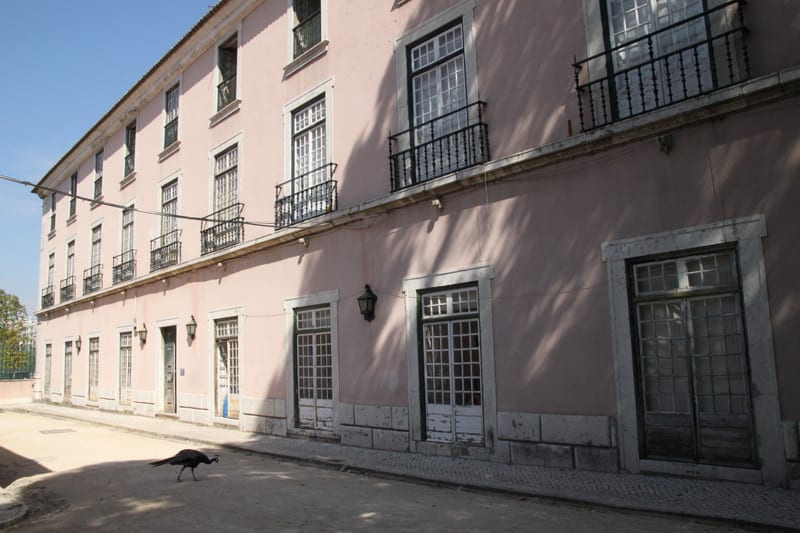
Reading rooms and a palace courtyard by Campo Pequeno.
Walk · 4 min16 min walk from stop 5

Coffee and brunch by day, wine and sharing plates by night near Gulbenkian.
Walk · 16 minKeep the named stops together, or use them to start your own Lisbon list.
Stop heights · metres, not a terrain survey
Walking times are approximate.
Compare modelled streets and elevation. Missing coverage stays unestimated; this is not an access guarantee.
Open the map to explore the stops and see walking directions.
No miradouro in this guide is a short walk from Avenidas Novas. The nearest:


From Lisbonline’s event listings, within about a fifteen-minute walk (a little further when the week is quiet). Times are Lisbon time; check the listing before you go.
See today in Lisbon or this week.
São Sebastião metro. The main avenues are broad and mostly level.
Tram and bus routes sometimes change for works. Lifts & shortcuts and Getting around Lisbon keep the current picture. Transport checked 6 November 2026.
The Gulbenkian says its museum is closed on Tuesdays, and CAM sells its own exhibition tickets, so check both before you go. Campo Pequeno’s programme changes by date: look up the event rather than turning up. The main avenues are broad and mostly level, but the crossings are wide and busy.
Gulbenkian and Campo Pequeno visitor information checked 23 November 2026.
The Gulbenkian also lists Carris buses 716, 726 and 756 on Avenida de Berna. Check Carris for the day’s timetable.
Further north, in Alvalade: Mori Sando~wich, a sandwich bar on Rua Marquesa de Alorna from the Capricciosa group.
Well connected, with several metro stations and quieter streets at night. You will travel into the centre for old-town evenings.
The Gulbenkian lists São Sebastião (blue and red lines) and Praça de Espanha (blue line). Both are a short walk from the museum at Avenida de Berna 45A.
The museum is closed on Tuesdays, according to the Gulbenkian’s own visitor page. Check CAM’s exhibition dates separately.
Campo Pequeno opened as a bullring in 1892. Visit Lisboa describes it now as a venue for concerts, markets and shows, with a museum and a shopping centre inside. Check the programme for your date.

A tree-lined boulevard of hotels, flagship shops and wide pavements.

A residential district with the Águas Livres aqueduct striding across the valley.

Intendente’s tiled square, seafood at Ramiro and a long, lived-in avenue running north.
Lisbonline locals share the places they go back to. When someone who loves Avenidas Novas publishes a guide, it appears here.
Know Avenidas Novas well? Make your own guide in two minutes →
Transport checked 6 November 2026. Station walks are approximate.
Spotted something out of date? →
One question. A better day.