
Plan your trip · Money
Money in Lisbon cash, cards and the card machine
Use euros, check the total and keep a little cash for small purchases. The essentials fit in a pocket.
Portugal uses the euro. If you rely on one card, ask whether it is accepted before you order.
In short
Portugal uses the euro and accepts cash, debit and credit cards. Check with the business before ordering if you need to use a particular card. Restaurant service is included. Carry a modest amount of cash separately from your main cards, especially on crowded transport.
Checked 11 November 2026
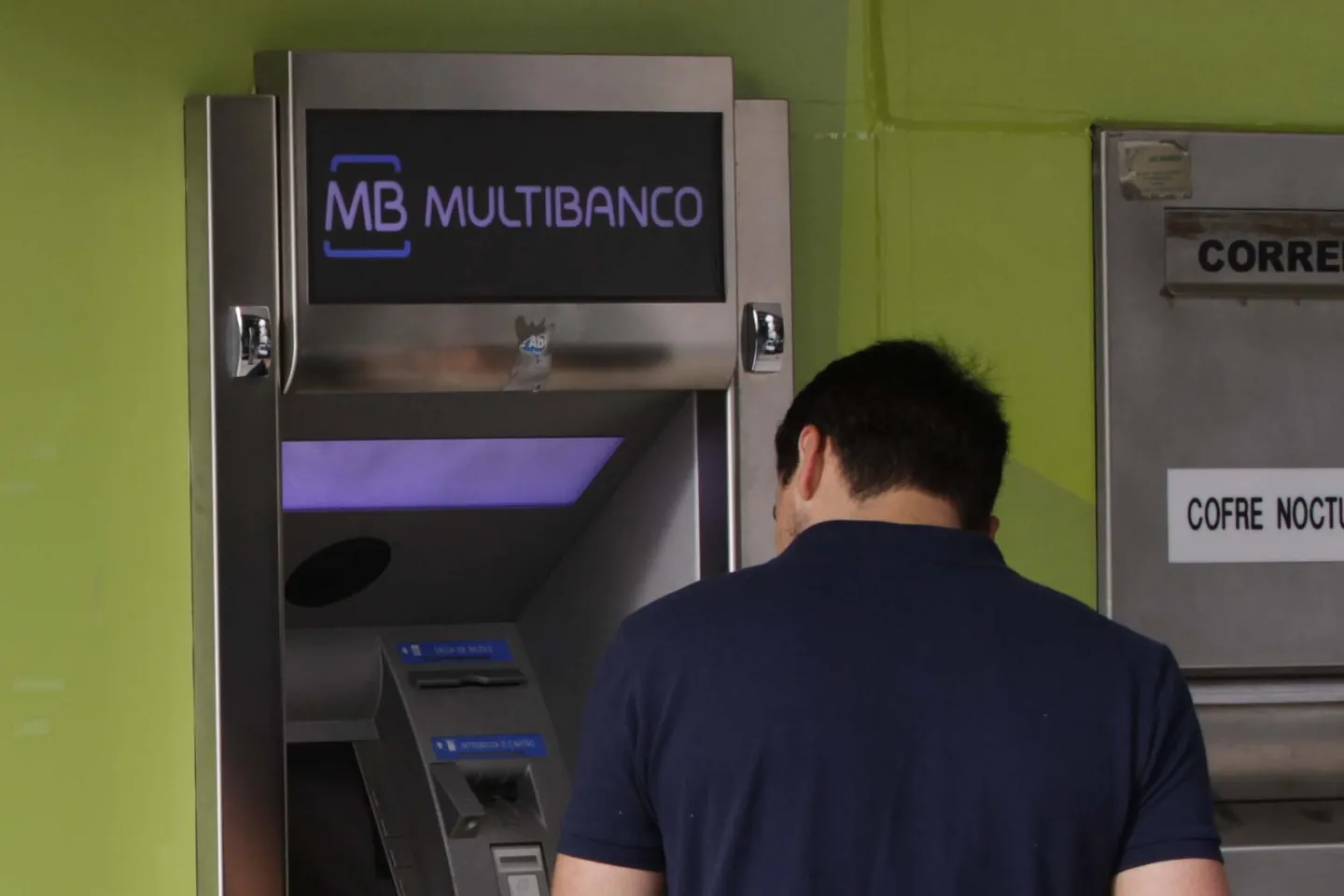
A Multibanco cash machine in Lisbon · August 2015 · Photo: Tokota / Wikimedia Commons · CC BY 3.0

Start with your question
- Card or cash?Paying in euros
- Euros or your currency?The question at the card machine
- A fee for paying by card?What EU rules allow
- Taking cash outThe fees to expect
- Coins and notesWhat you will be given
- Is service included?Tipping at a restaurant
- Keeping money safeA little in a separate place
- How much to tipThe tipping guide and calculator
Pay in euros
Portugal uses the euro. One euro is 100 cents. Businesses accept different payment methods, so ask before ordering when you are relying on a particular card.
Tipping at a restaurant
Service is included. Turismo de Portugal describes an extra 5–10% as customary. Choose a tip that suits you and the service.
Keep a little separate
The Foreign Office advises keeping valuables in separate places and a copy of your passport somewhere safe. Keep the amount you need for the day easy to reach.
No extra charge for paying by card
Traders in the EU are not allowed to charge extra when you pay with a debit or credit card. American Express, Diners Club and business cards are the exceptions, and even then the fee cannot be more than the payment costs the trader.
Euros or your home currency?
If your card is not in euros, a card machine or website may offer to charge you in your home currency. It must tell you exactly how much extra that costs, as a percentage over the European Central Bank’s exchange rates. The extra fees often make that option more expensive; paying in euros is often the cheapest, though you see the final amount only on your statement. You can always decline and pay in euros.
Taking cash out
Withdrawing euros with a card in another currency can cost more than the amount you take out. Your bank may add a foreign transaction fee or a currency conversion fee, and the owner of the cash machine may charge a fee of its own. Check your bank’s charges before you travel.
Notes and coins
Euro coins come in eight values, and any euro coin can be used anywhere in the euro area, whichever country is on its national side. The notes now issued run from €5 to €200. The €500 note has not been issued since 27 April 2019; the European Central Bank says it will always keep its value.
- Coins
- 1, 2, 5, 10, 20 and 50 cent€1 and €2
- Notes
- €5, €10, €20, €50, €100 and €200the notes now issued
Sources & checks
- Turismo de Portugal · 11 November 2026
- UK Foreign Office · 11 November 2026
- Your Europe · 24 November 2026
- European Central Bank · 24 November 2026
- European Central Bank · 24 November 2026
Check the operator before a journey or a special visit.